Custom Magic Cards
Overview
For a close friends’ birthday, I designed and produced a series of custom Magic: the Gathering cards inspired by the people, decks, and inside jokes that make up our playgroup.
The project began when Ethan’s partner Shannon asked if I could help create some Magic cards based on Ethan’s friends, family, and deck preferences. After some brainstorming, I wanted to make this project substantial with real mechanics, personality, and flavor honoring everyone depicted in this collection whilst still being recognizable within Magic’s existing design language.
We ultimately divided the project into several packs inspired by Magic’s Secret Lair products, with each drop dedicated to a different group of Ethan’s friends & family. We split these into one dedicated to Ethan’s family, another for Ethan’s friends, and the last one dedicated to his partner Shannon.
The project ended up with:
31 Unique Magic Cards
7 Custom Arts designed through real photography & photoshop
5 double-sided tokens + 1 regular token
Rebranding & Brand Identity Unification
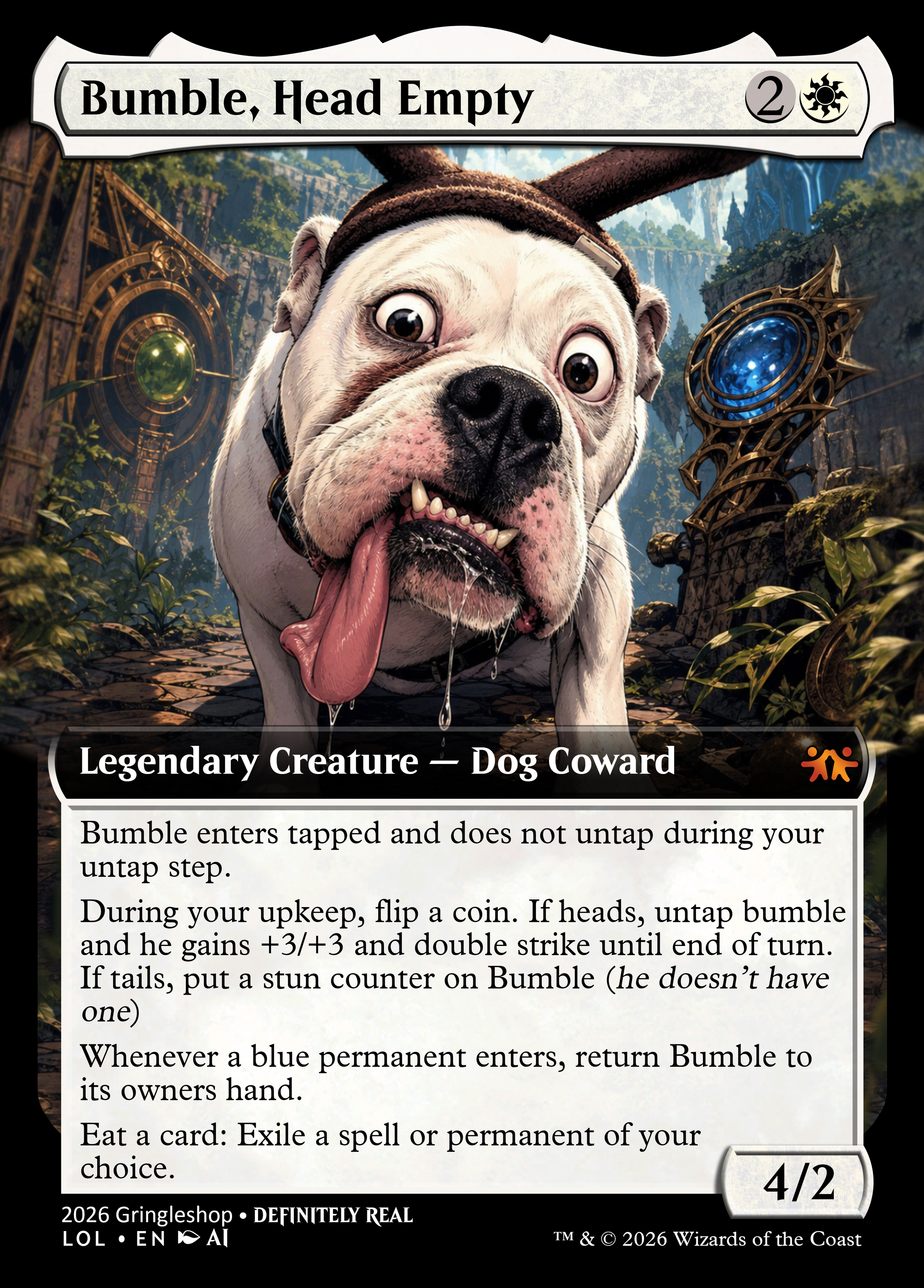
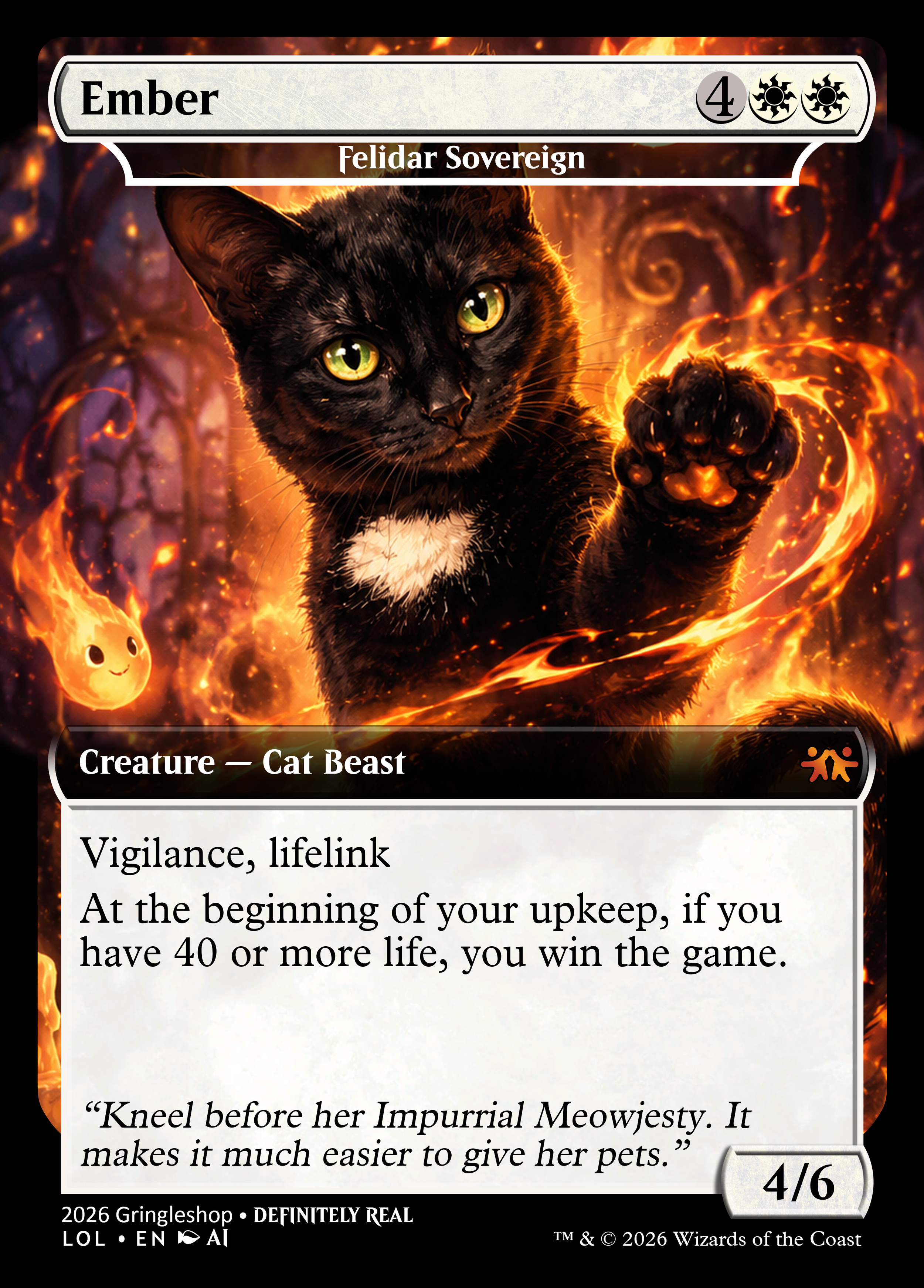
The pets here and passed depicted as Magic cards
Key Takeaways
One of the biggest lessons from this project is that creativity does not require reinventing the wheel. Leveraging the limits, standards, and mechanics of the system helps to set the limits for what can and can’t be narratively expressed.
Magic already provides an enormous amount of mechanical vocabulary and has a proven record of translating any form of fantastical themes into gameplay mechanics. The challenge was identifying what pieces of that vocabulary best expressed an idea, then finding which opportunities can be recombined or reinterpreted to achieve the goal.
The best, strongest designs were seldom the most complicated, but rather the ones that communicated the intended idea with the least explanation.
Systems & Design
I am a very avid Magic: the Gathering fan. Having worked in card stores, played for nearly 10 years, and getting countless people into the game over my time playing, I have become the de facto “Magic Guy” in our group. When tackling this gift, I wanted each card to satisfy three goals:
Mechanical Coherency:
The card should interact with Magic’s existing systems in a meaningful and understandable way. This means that cards need to be templated using Magic terminology.Personal Identity:
Each card’s mechanics, naming, and flavor should communicate something clear & recognizable about the person it represents.Playability & Balance:
While it would be easy to make these cards entirely broken, I wanted each card to feel exciting, strong, and explore relatively unique design space without being completely unreasonable or unusable in an actual game
To iterate on all the cards, I maintained a spreadsheet to iterate on card names, brainstorm mechanics, test mana costs, format rules texts, track references, and list design notes. This gave myself & anyone who I was consulting with a centralized place to compare ideas, track revisions, and ensure the set remained mechanically & thematically consistent.
For each person, I wrote out a bunch of keywords, themes, or inside jokes that I felt could translate well into Magic form. I also reached out to everyone who was going to be depicted to gather what they felt their relationship with Ethan meant to them. This was helped by the fact that Ethan and I share many mutual friends, so I was able to translate many shared stories and personality traits into mechanics, interactions, and subtle references.
Throughout this process, I repeatedly asked the question:
“What is the simplest mechanical expression of this person that still feels unmistakably like them?”
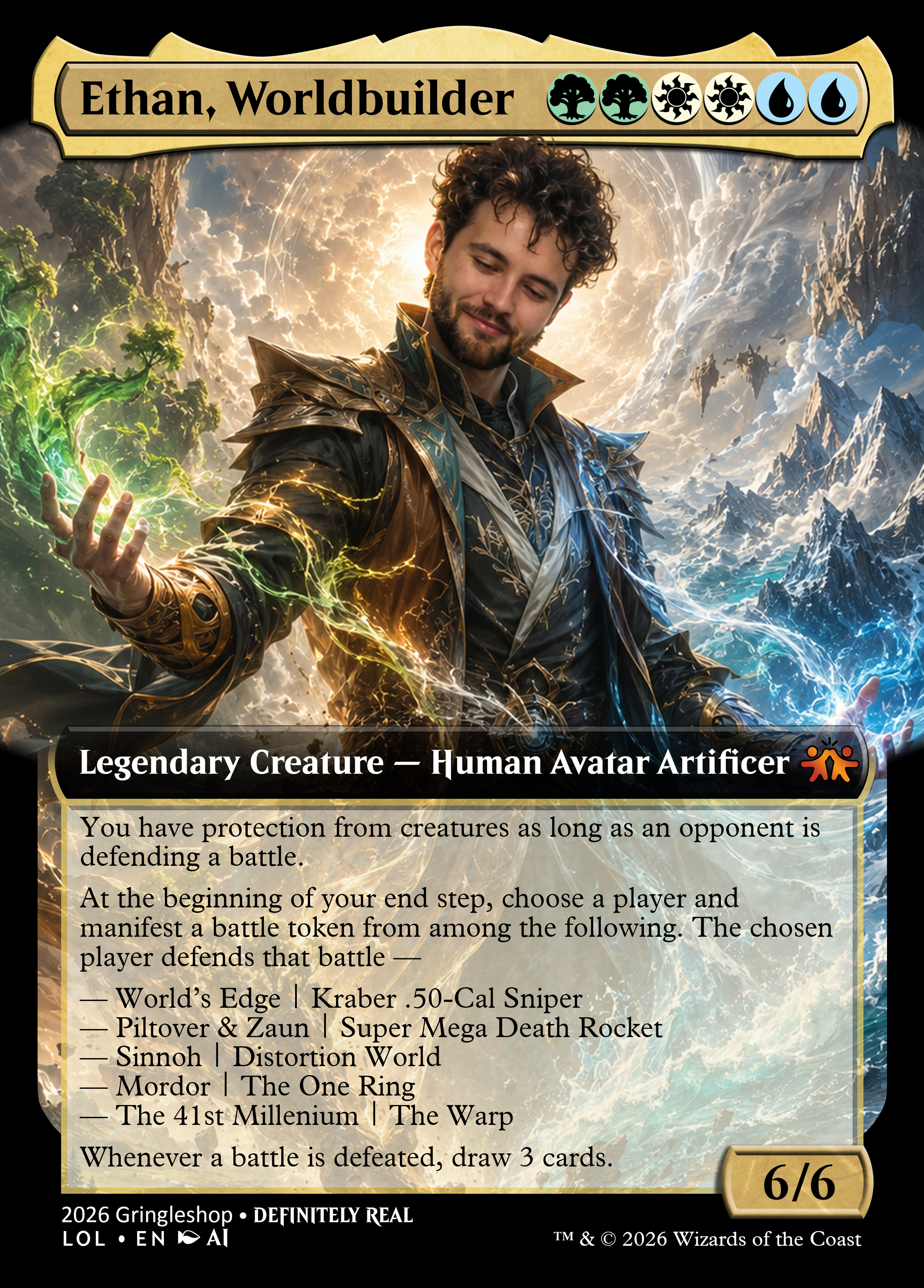
Designing: Ethan, Worldbuilder
The card I spent the most time developing was Ethan’s own personal card. Ethan is a level designer, and had been working to build a ‘level design’ Commander deck centered around effects that alter how players interact with the game. One card type he had hoped to leverage was Battles.
While his initial goal was smart, to utilize Battles as a pseudo side-quest for opponents to attack, the way they are deployed is very insular. Under traditional Magic rules, the player who casts the Battle receives the benefit when it is defeated, with another player chosen to defend it. This results in very minimal incentives for opponents to attack another players’ battle. So, I wanted to let Ethan’s card fix this problem.
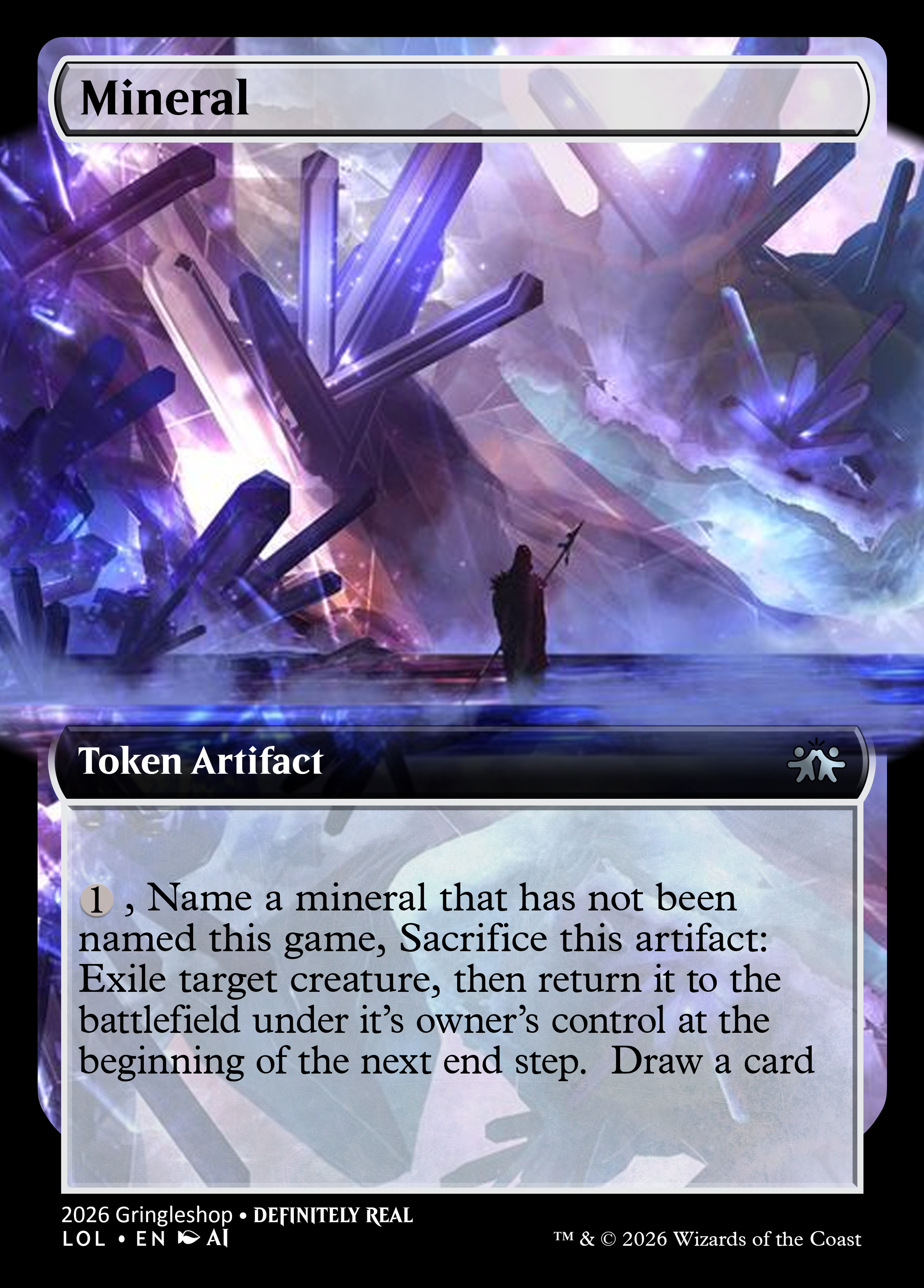
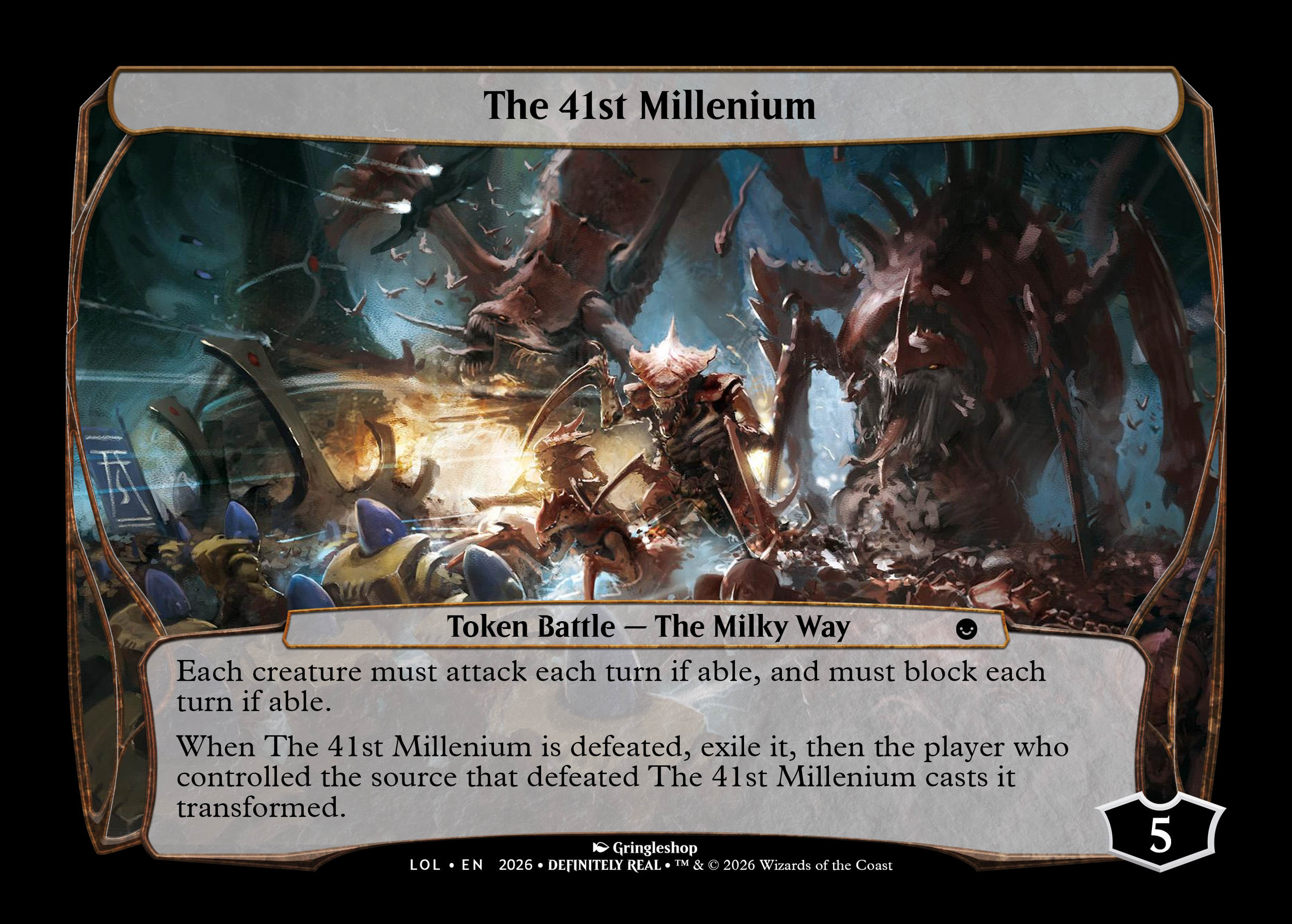
Ethan, Worldbuilder, allows players to defend unique Battles that provide their defeating bonuses to the player who defeats it. These resulted in double-sided Battle tokens where the front applies a passive effect and the back grants control of a powerful spell. To theme these, they were designed around some of Ethans’s favorite fictional IPs including:
Runeterra, Warhammer 40k, Pokémon, Apex Legends, and Middle-Earth.
This resulted in a fun twist on an existing and underexplored mechanic to create new social and strategic decisions without replacing the mechanic’s original identity. Instead of just replacing the rules, I found a way to leverage their limits to create new decision points that have yet to be explored in Magic’s current design.
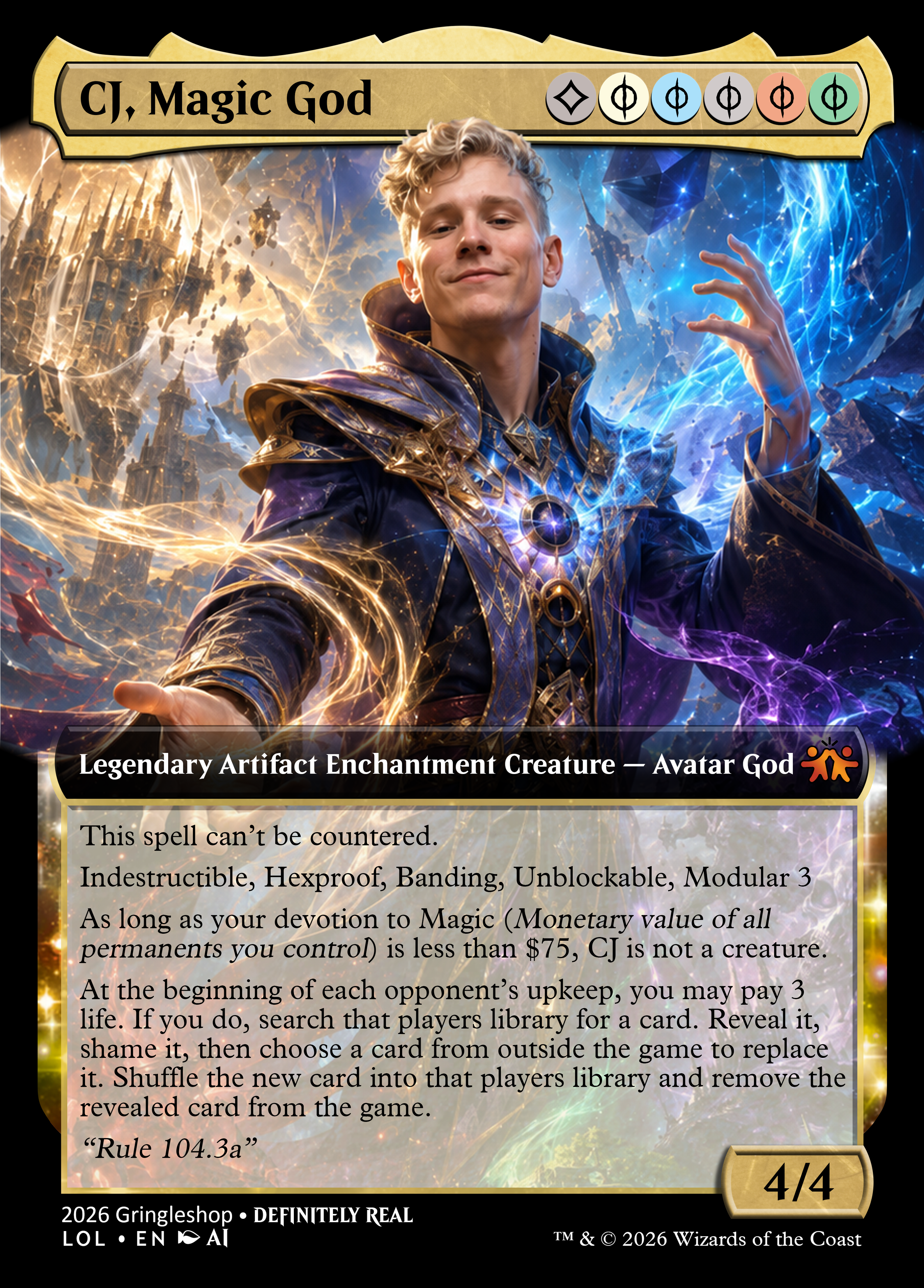
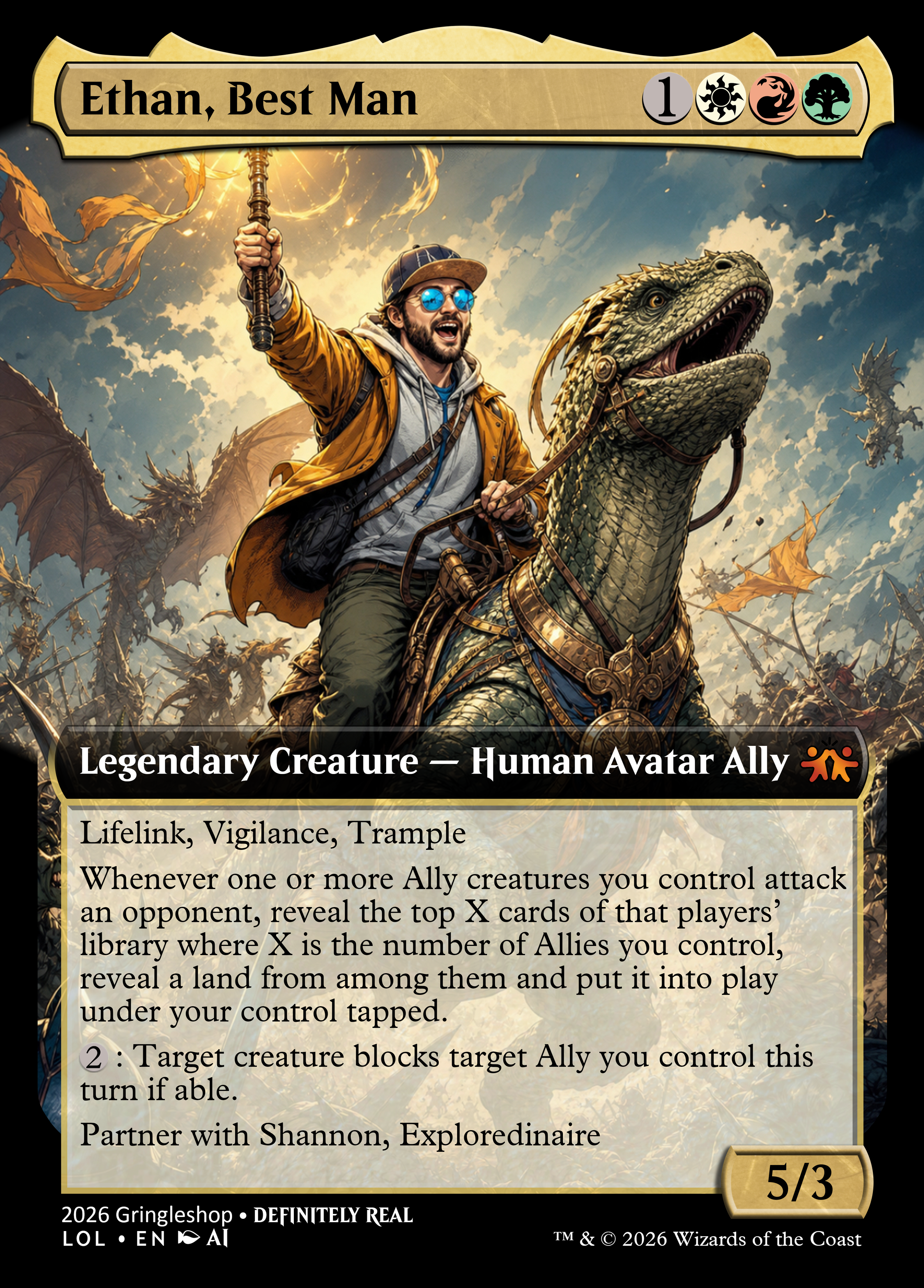
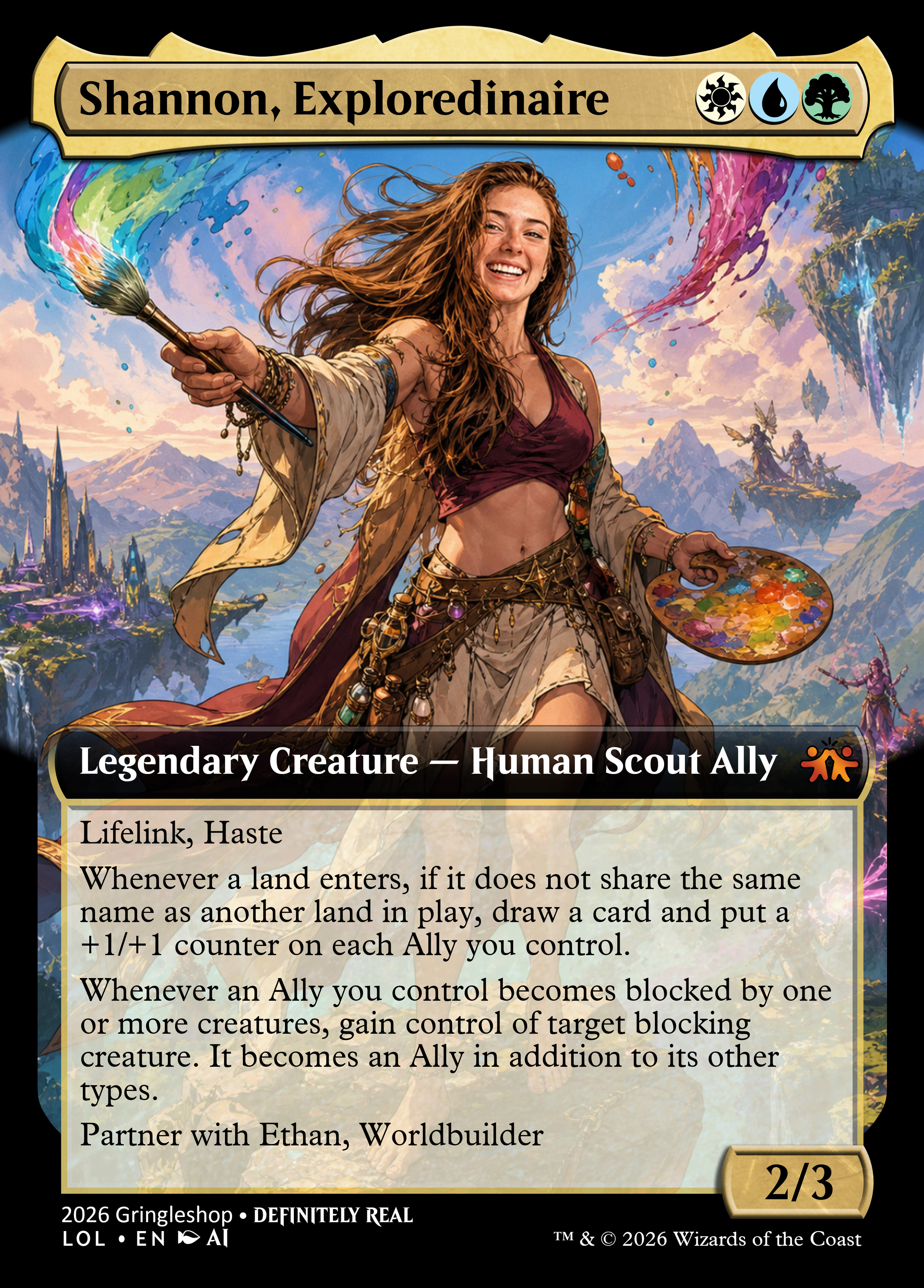
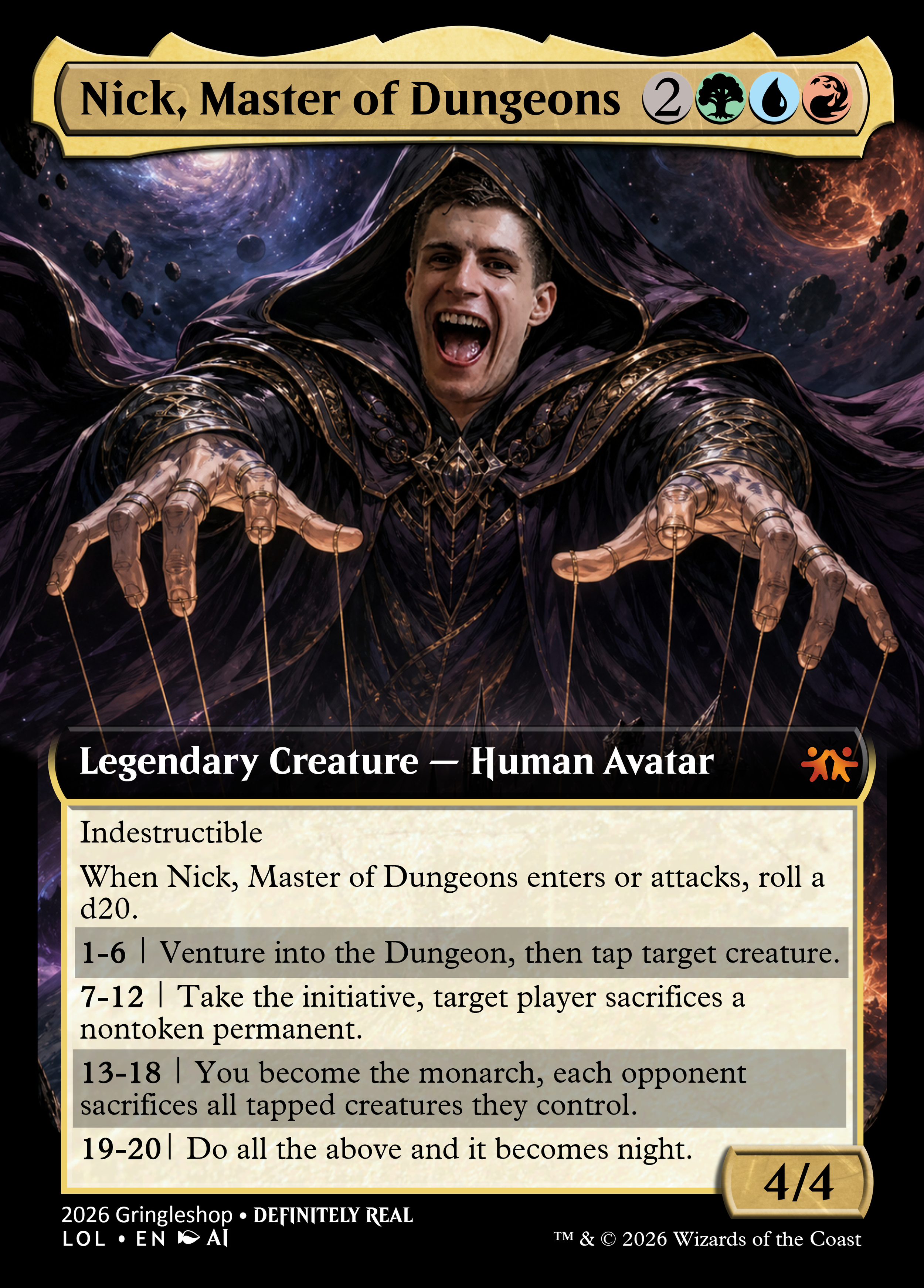
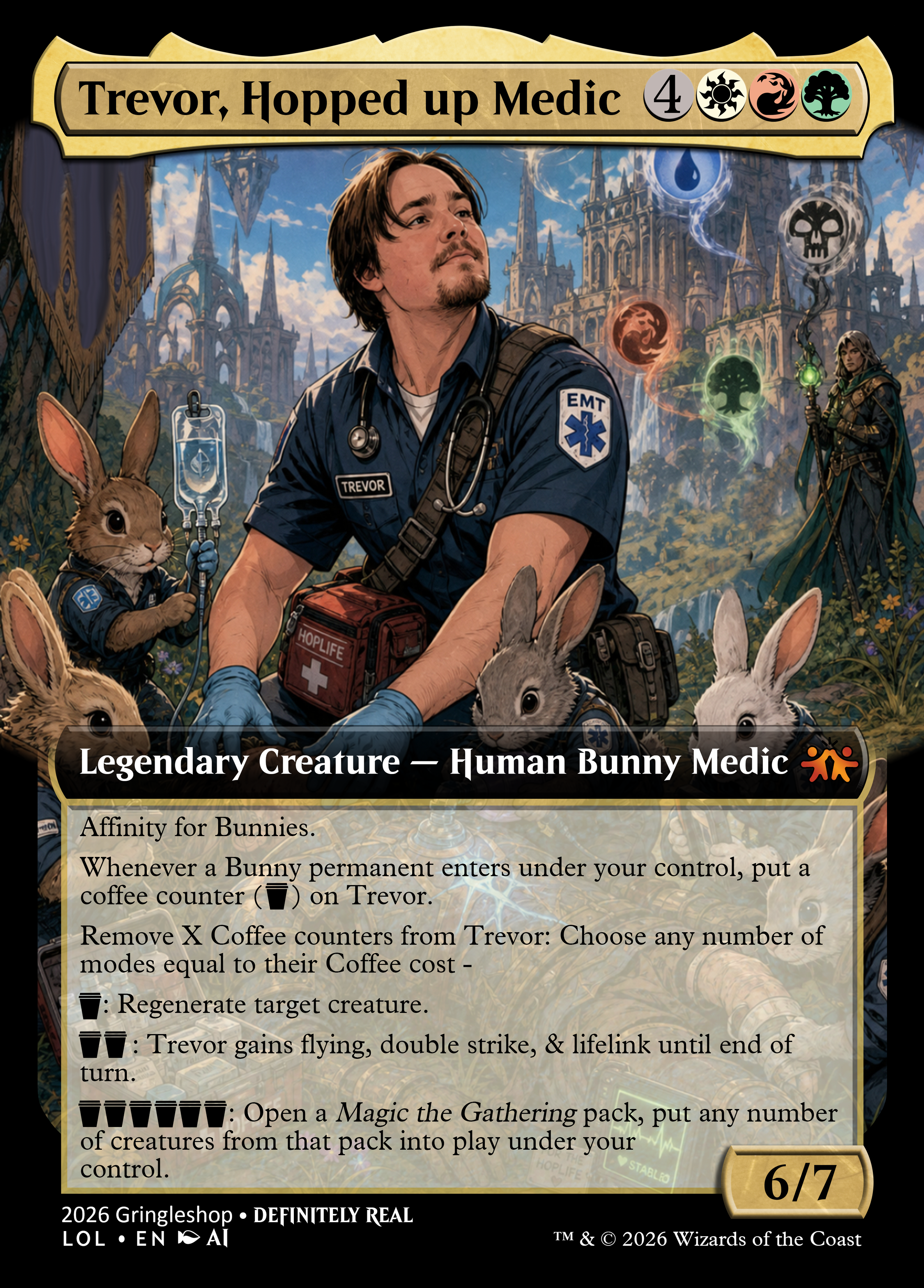
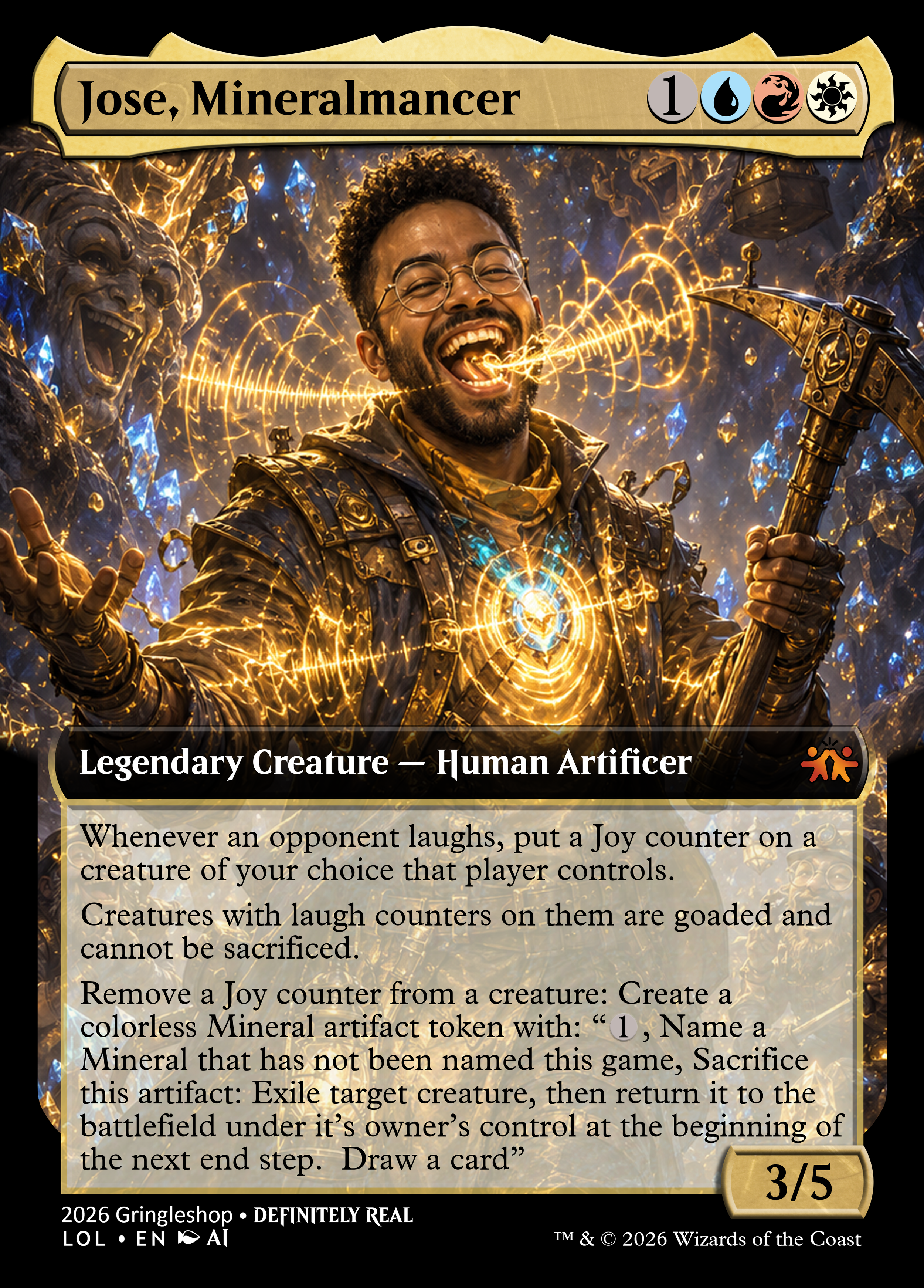
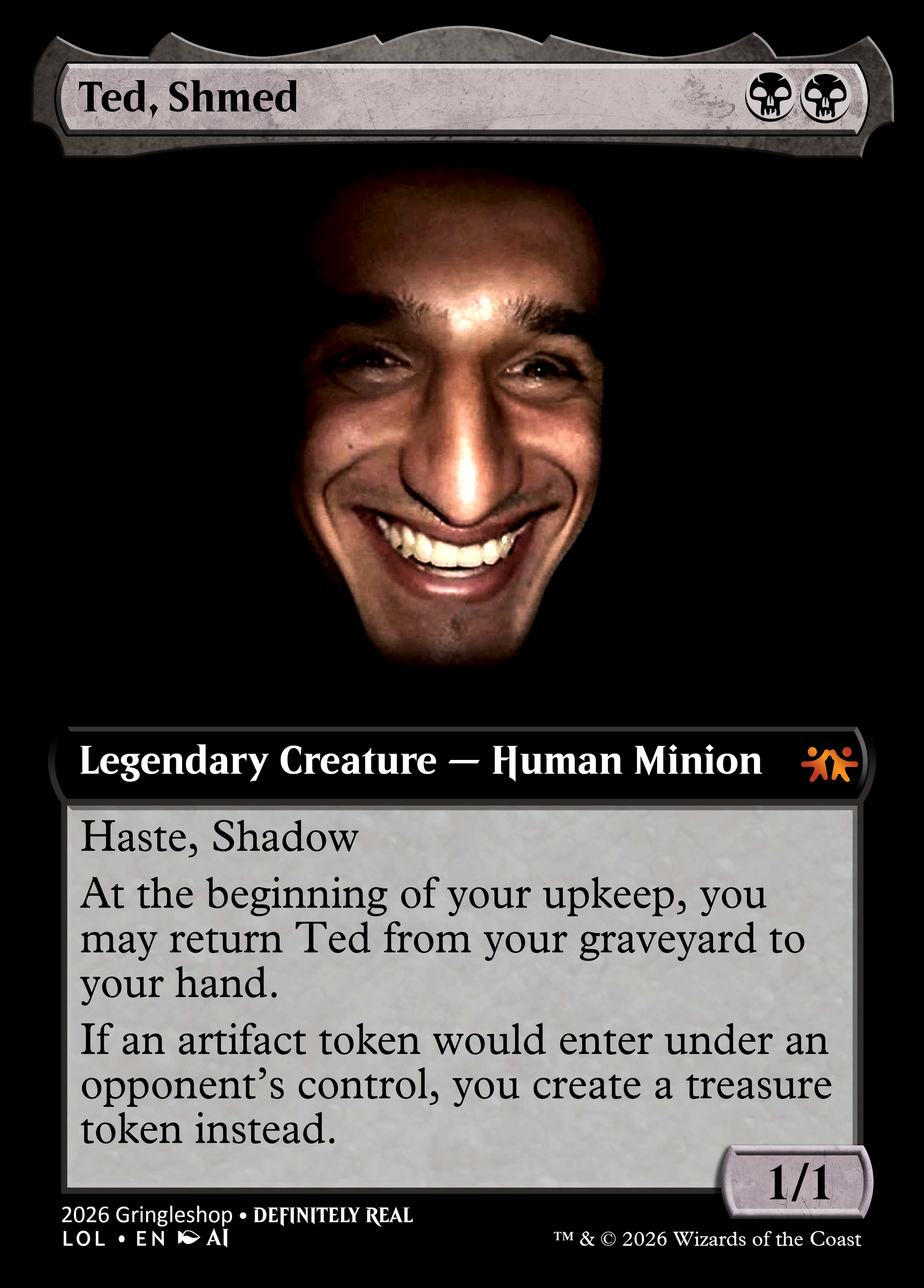
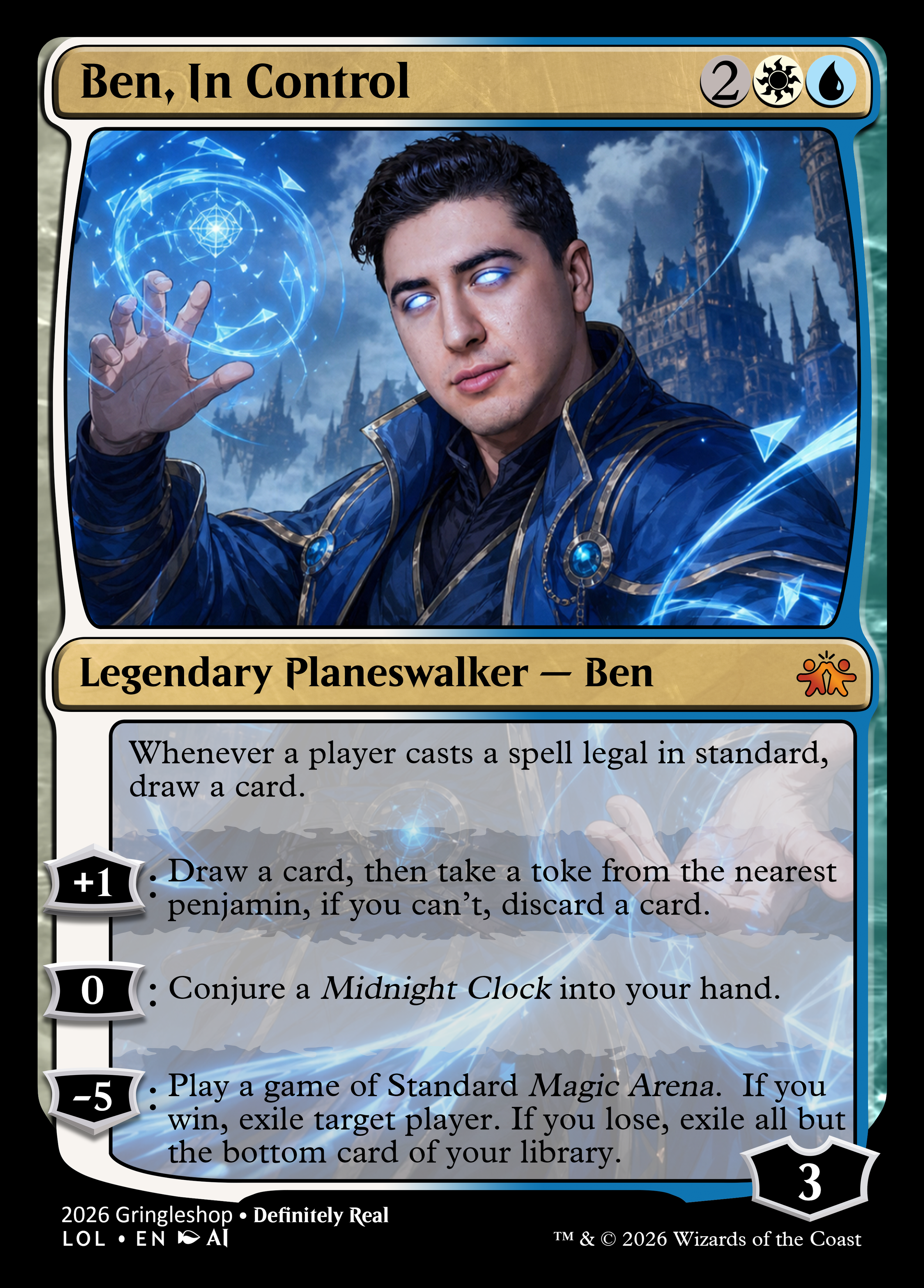
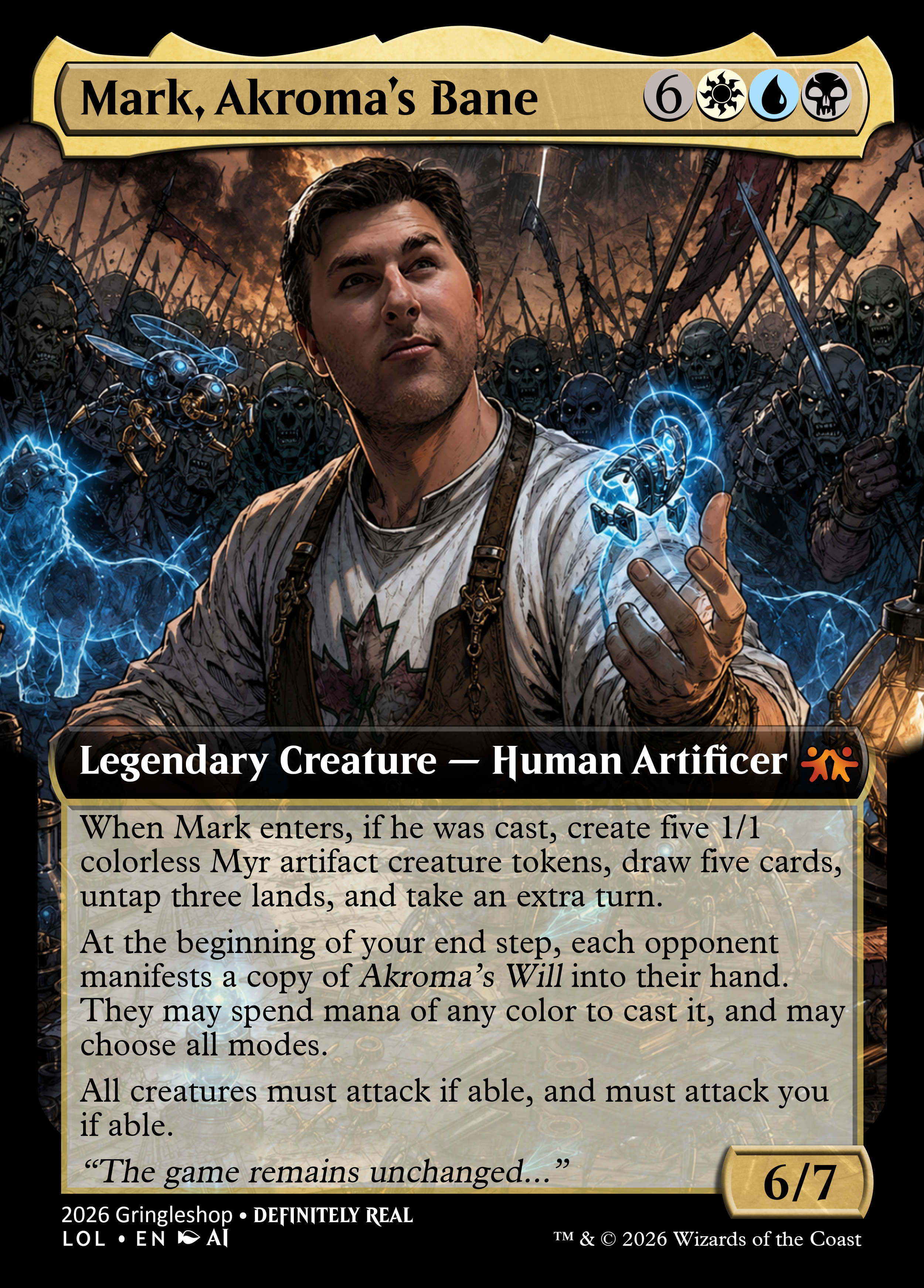
Custom Magic Cards displaying myself, and my two friends’ Shannon, and Ethan.
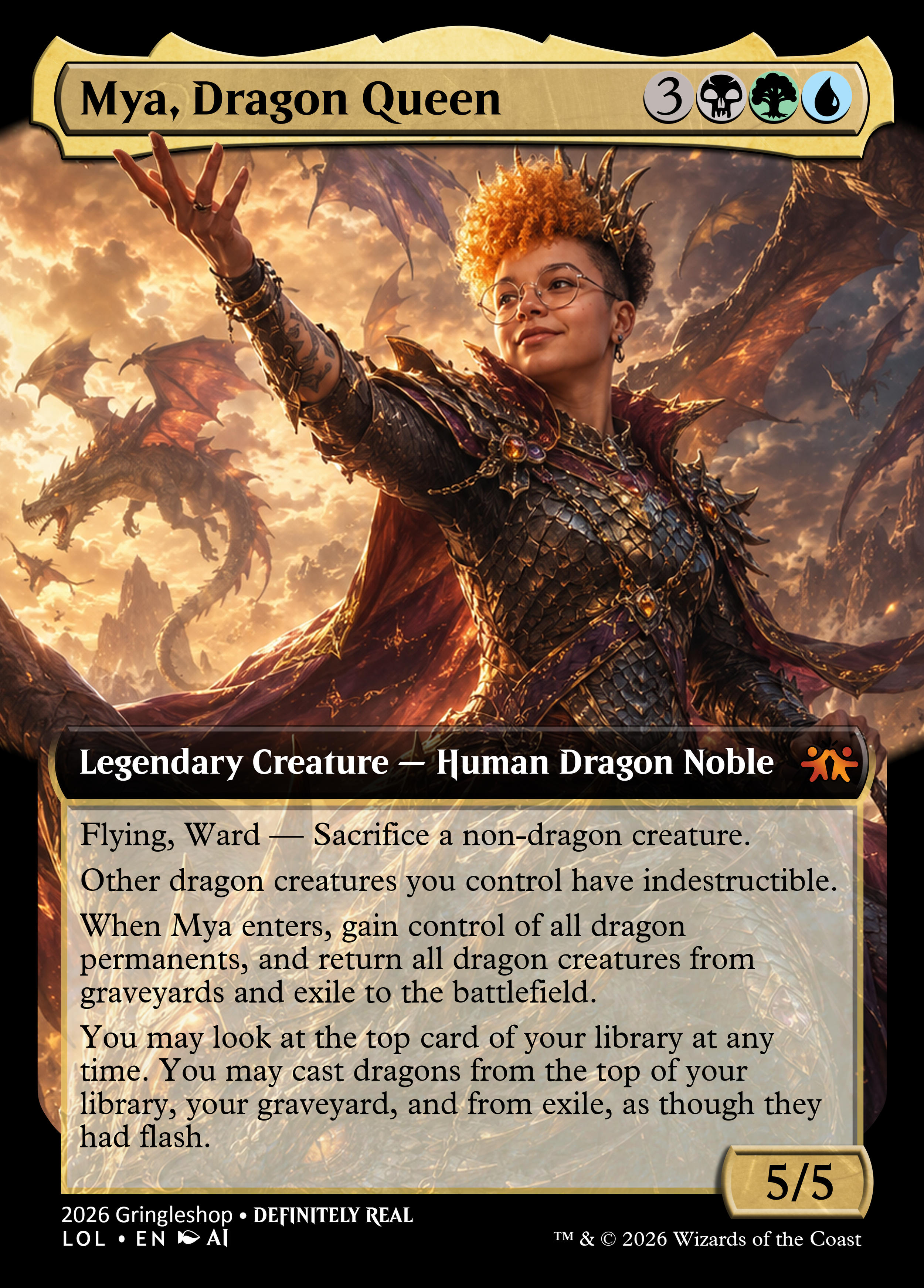
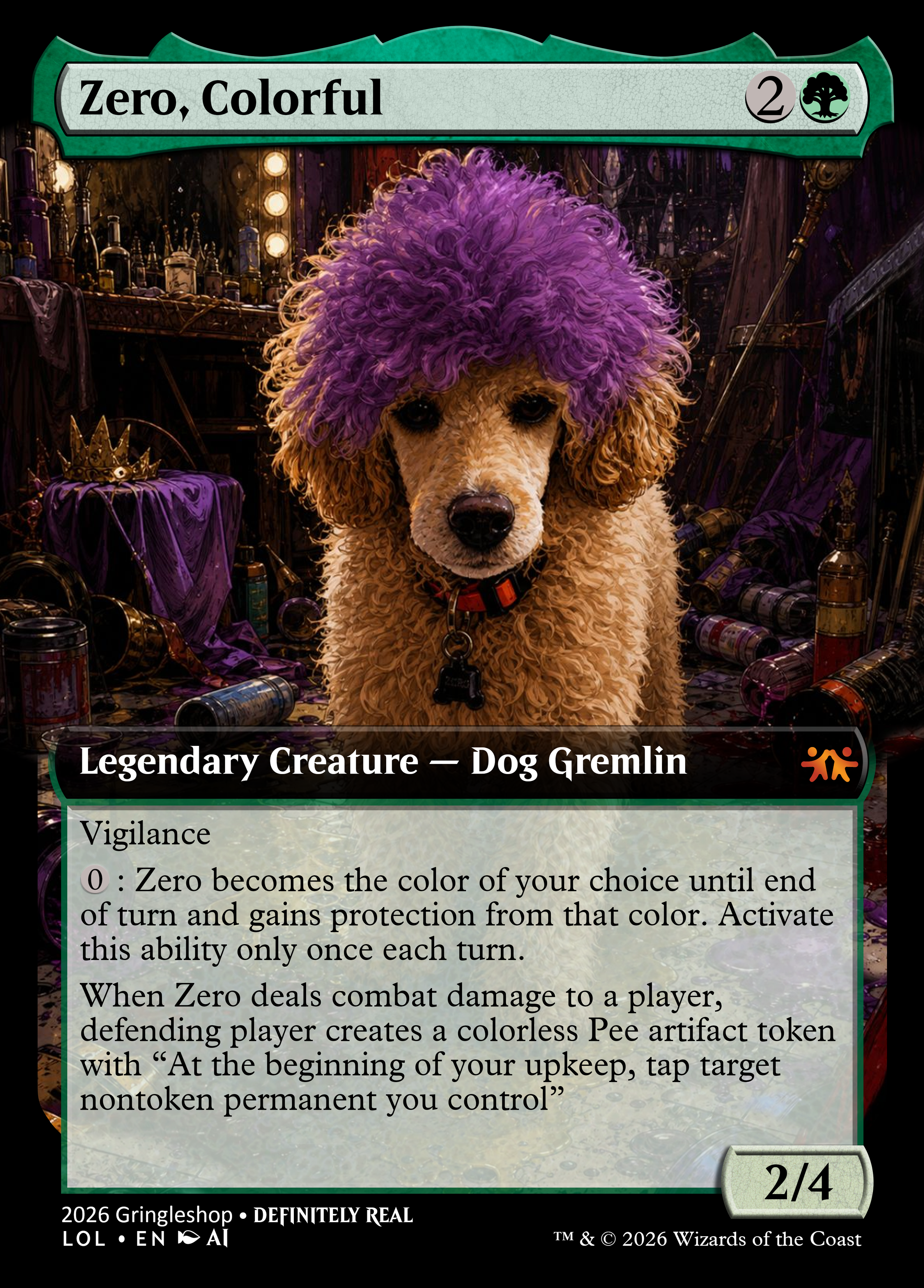
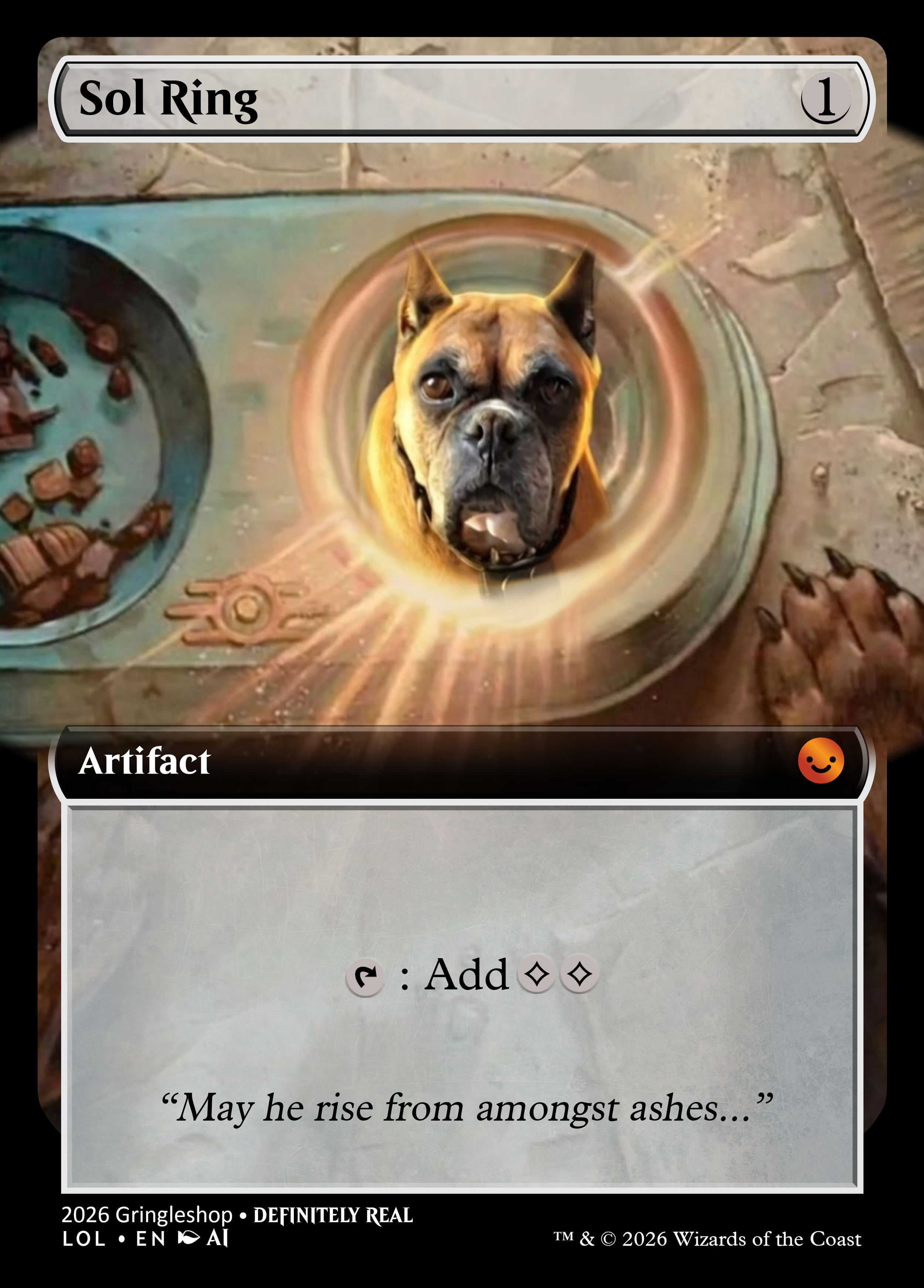
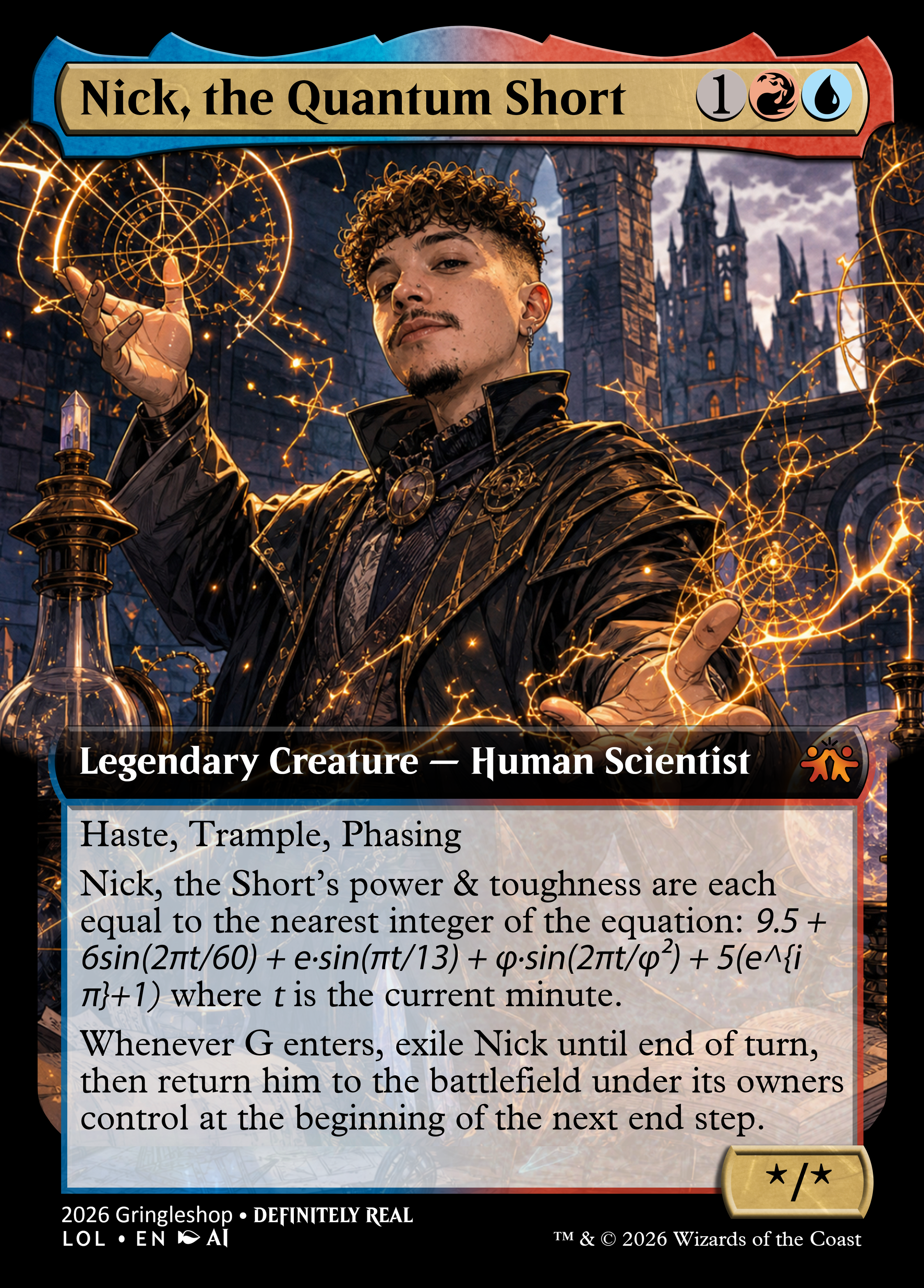
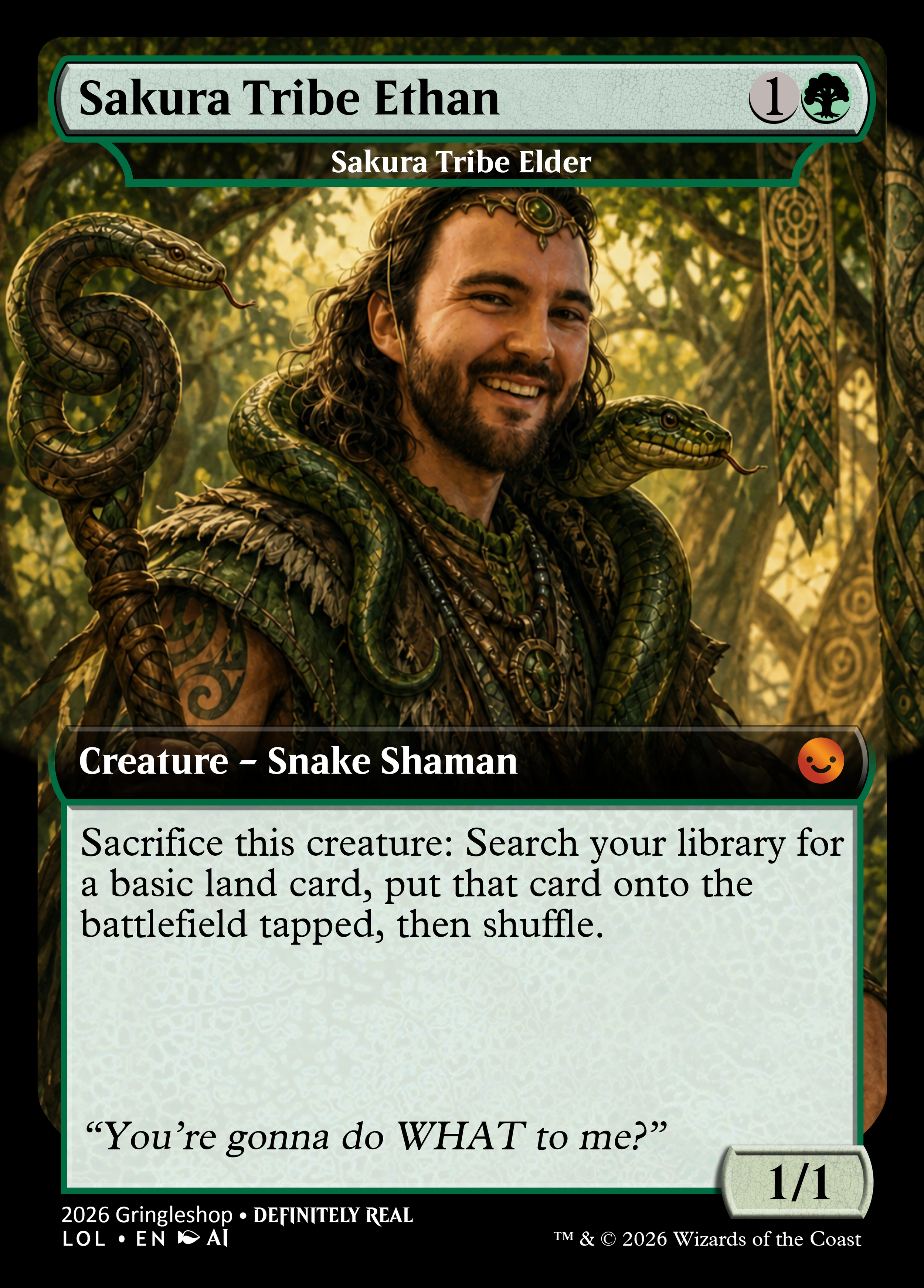
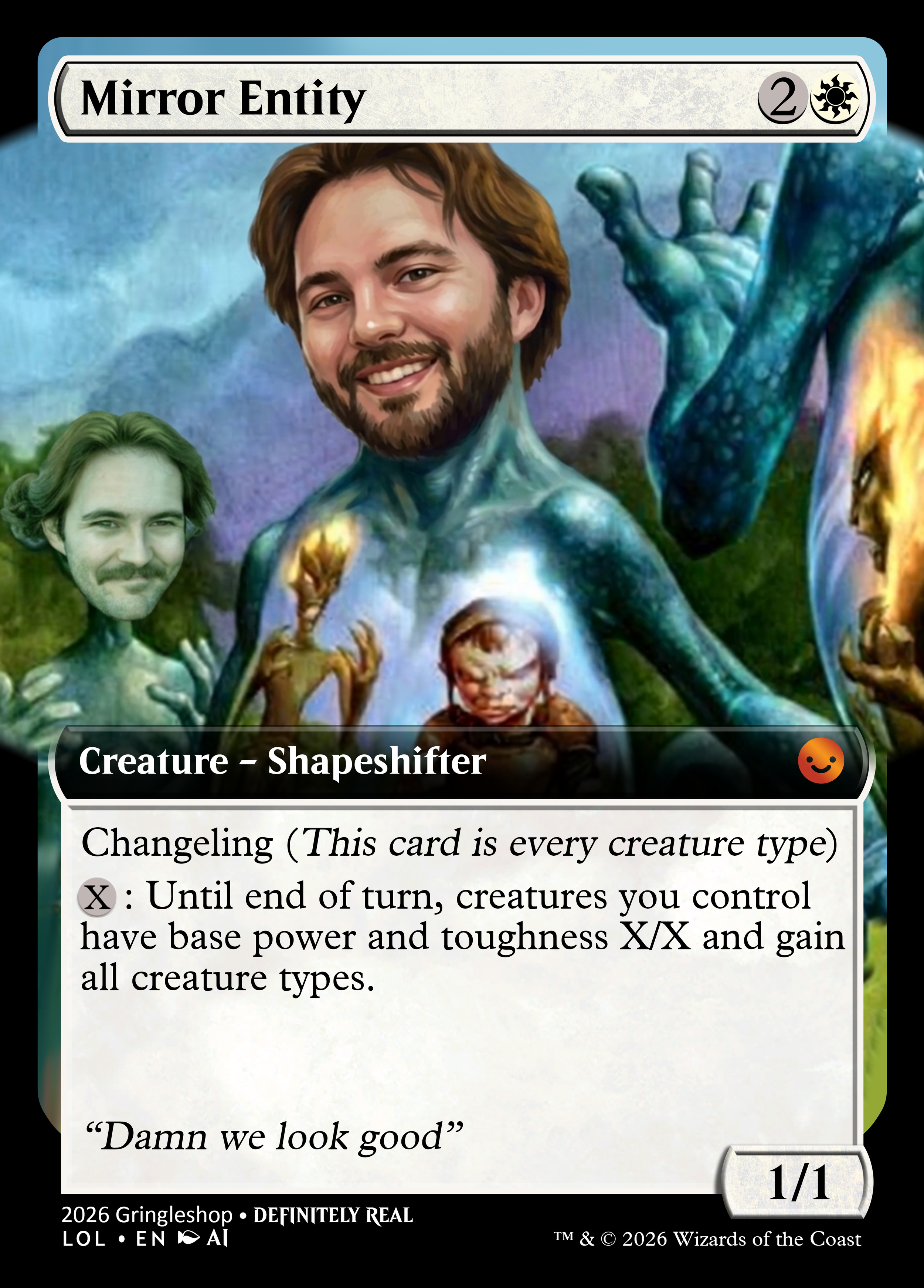
Custom Magic Cards displaying my partner Mya, and my friend Derrick.
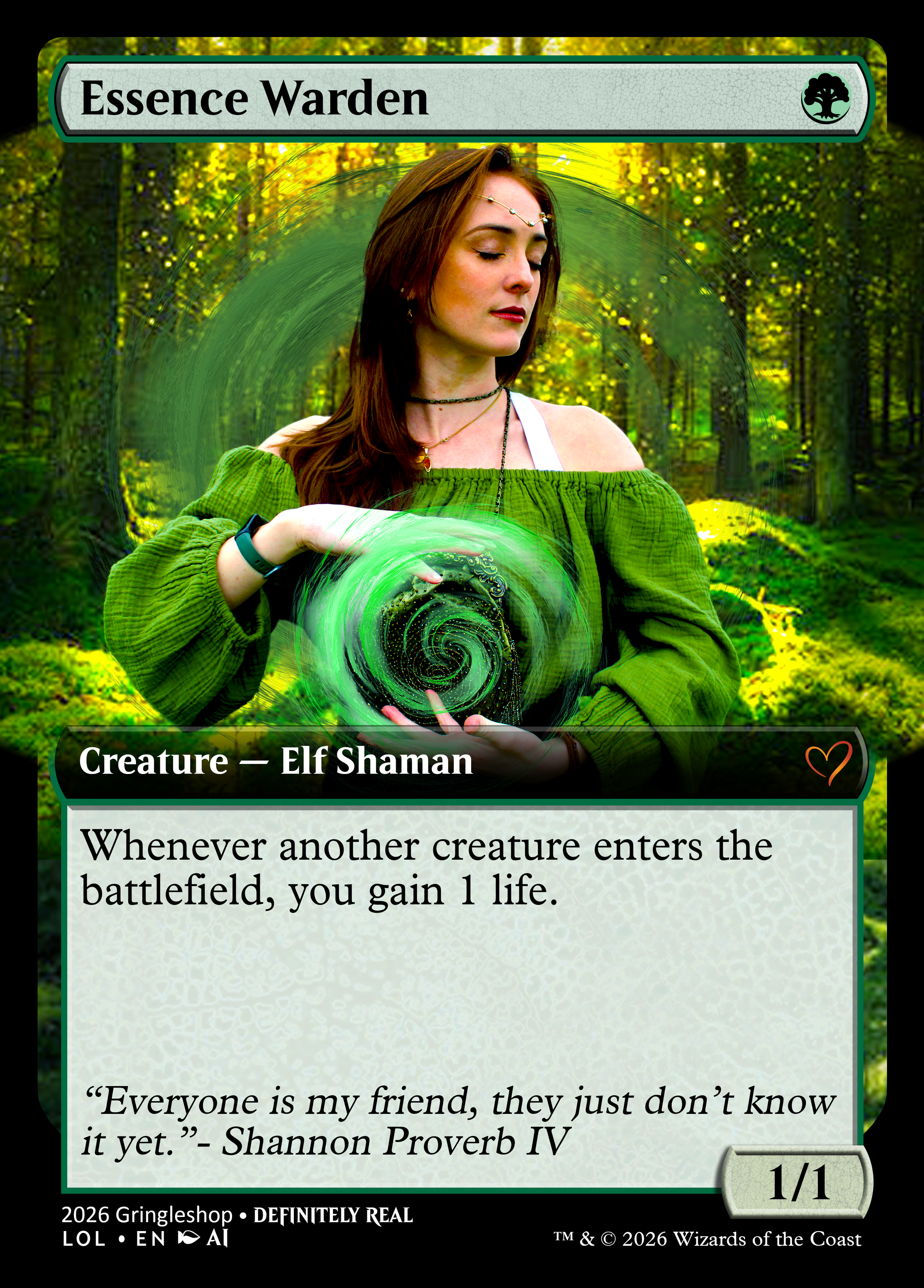
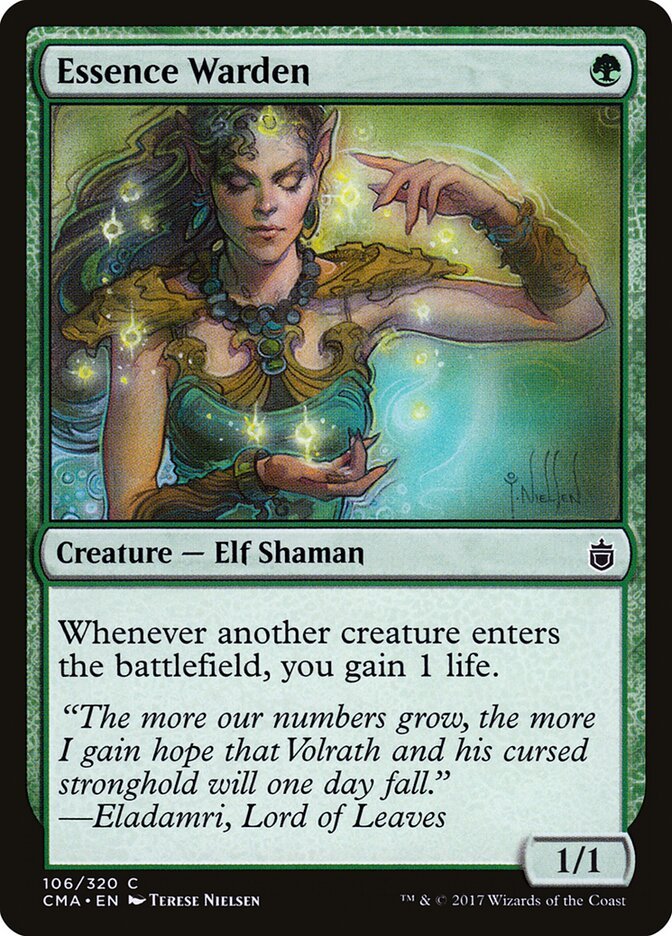
Original Essence Warden by Terese Nielsen (Left) versus Essence Warden by CJ & Shannon (Right)
My Role
While I can never take credit for the impetus behind this project, I was responsible for the majority of the project’s design & production pipeline including:
Mechanical & card design
Rules text and templating
Design documentation and spreadsheet maintenance
Player/personality research
Photoshop production & card layouts
Image cleanup & visual edits
Print preparation & set organization
The project had a large amount of creative freedom while still being constrained by Magic’s formatting & systems. I was designing within this established game, visual design, rules vocabulary, and broad balancing expectations while still trying to produce something personal and original.
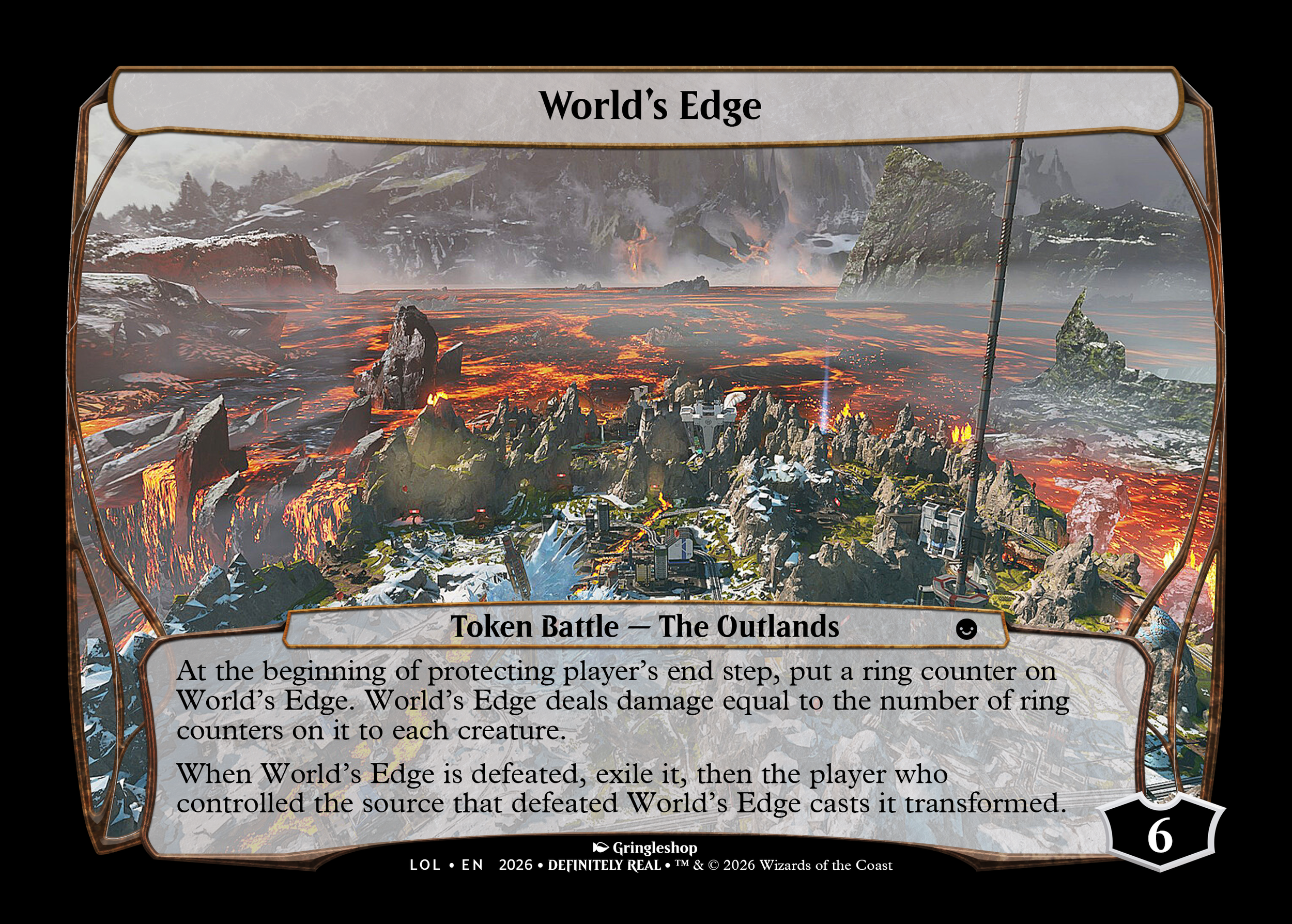
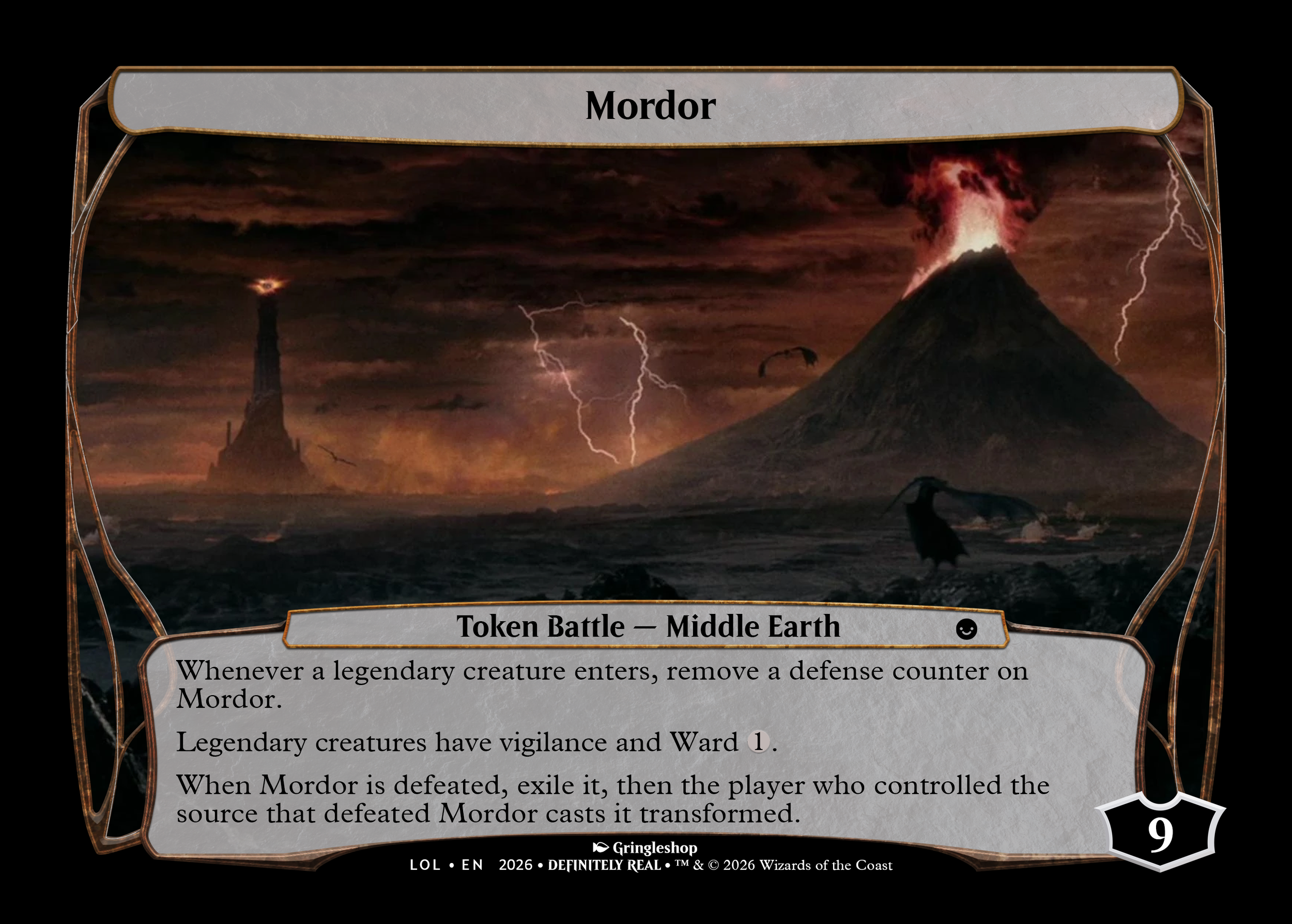
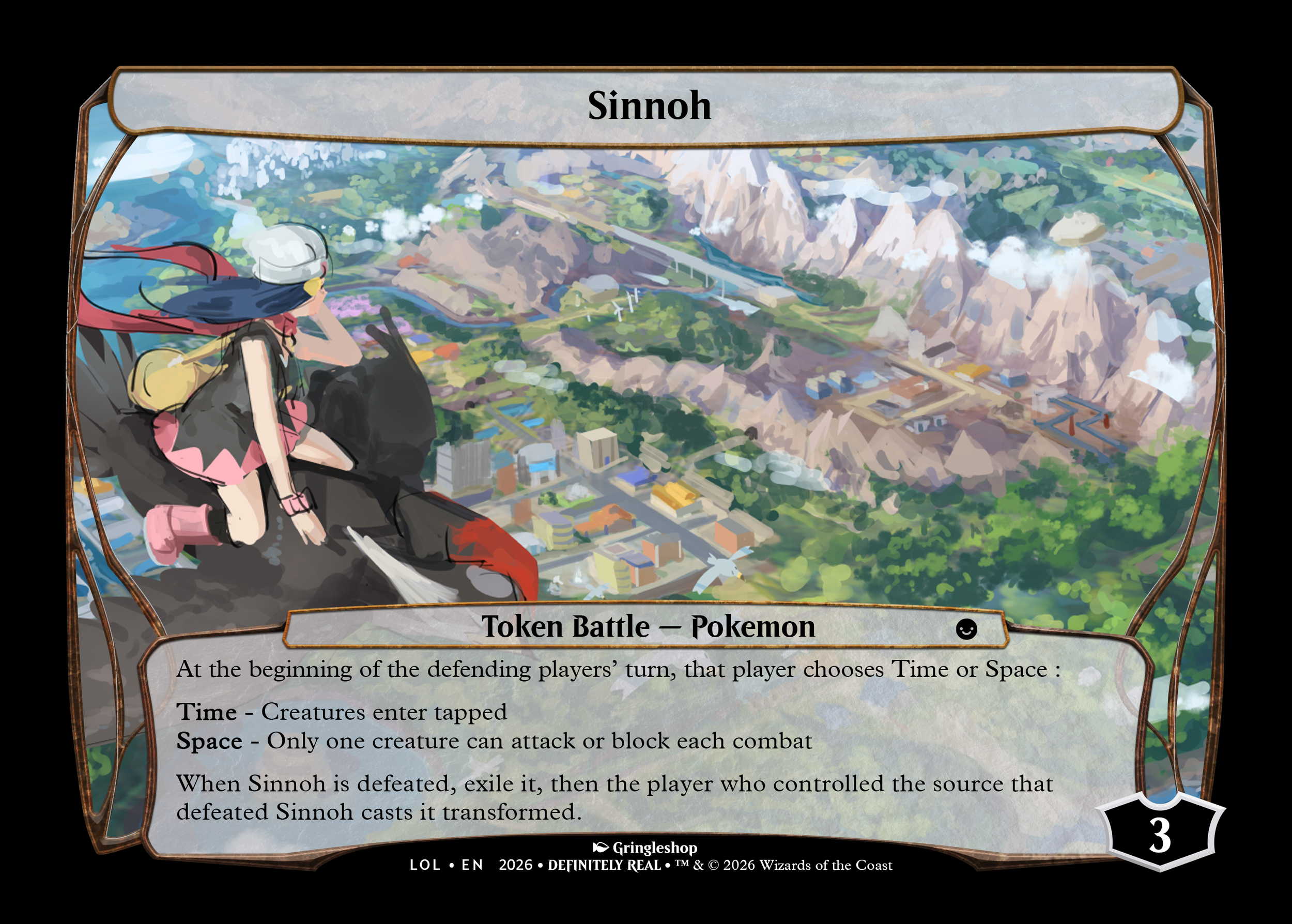
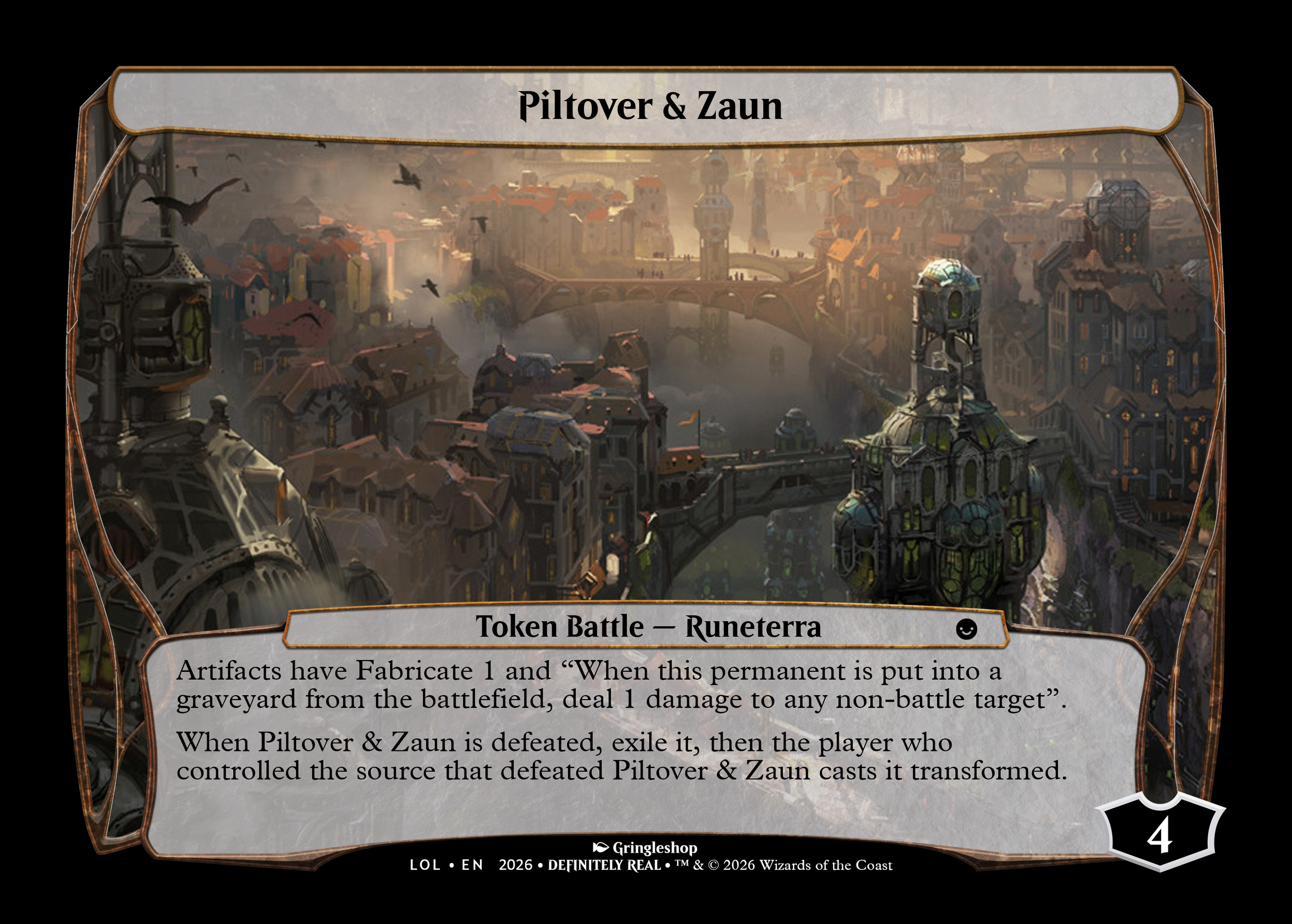
Ethan, Worldbuilder & his 5 battles that he can create. View the full collection for the other sides!
Visual Production
Once the mechanical designs had been established I moved onto production. Sourcing a community-build Github repository that contained a Photoshop template system, I was able to reproduce magic-looking fonts, icons, text boxes, and frames easily.
For a majority of the images used, the subject provided some photographs that were transformed into something more thematic and magic-adjacent through AI image altering.
For Shannon’s cards we organized a dedicated photoshoot, planned costumes, locations, and visual concepts to emulate the card they were looking to represent.
With the shoot going phenomenally well, I added backgrounds, color grading, and some visual additions to match the card to the original as closely as possible.
I then organized all the card designs into how many prints were necessary, designed a custom Magic-inspired back, and then commissioned a mutual friend to handle physical printing and production.
Design Within Constraints
Mechanics Communicate Character
The project reinforced how strongly mechanics can carry theme.
If any card felt like the person solely because their name and photograph was on it, it was scrapped and reinterpreted. The cards should represent the person based on how they operate in gameplay, what decisions & actions the card facilitates, and how their interactions represent the person depicted.
This distinction turned into my main measure of whether a design was successful or not.
Balance Is Contextual
Since these cards are intended to be playable, I had to limit the novelty or outside-the-game effects that are seen in many of Magic’s Un-Sets.
I aimed to design cards that still felt exciting and memorable without obviously eclipsing the power expectations of the decks they would enter. This means that repeatedly evaluating mana cost, interaction potential, repeatability, board impact, and how individual mechanics could behave when combined with Magic’s much larger card pool.
This was especially important when introducing unusual multiplayer incentives, as with Ethan, Worldbuilder’s Battle-focused design.
Intention Encourages Iteration
At the end of the day, this was originally designed as a gift for Ethan.
I wanted to put as much of myself into these cards as I could, because I wanted to capture friendships, shared memories, and the way this group spends time enjoying eachother’s company.
Remembering that these cards would be seen by both Ethan and the recipient made me reassess card designs, speak with the people, and try to put myself in their shoes to see how they wanted to be perceived and share their communal appreciation for our friend Ethan.
In the end, watching Ethan open all the completed sets made the months of iteration & work worth every second.